


Table of Contents
Trainee Clinical Technician at Mediclinic – Work-Integrated Learning Opportunity for Engineering Graduates
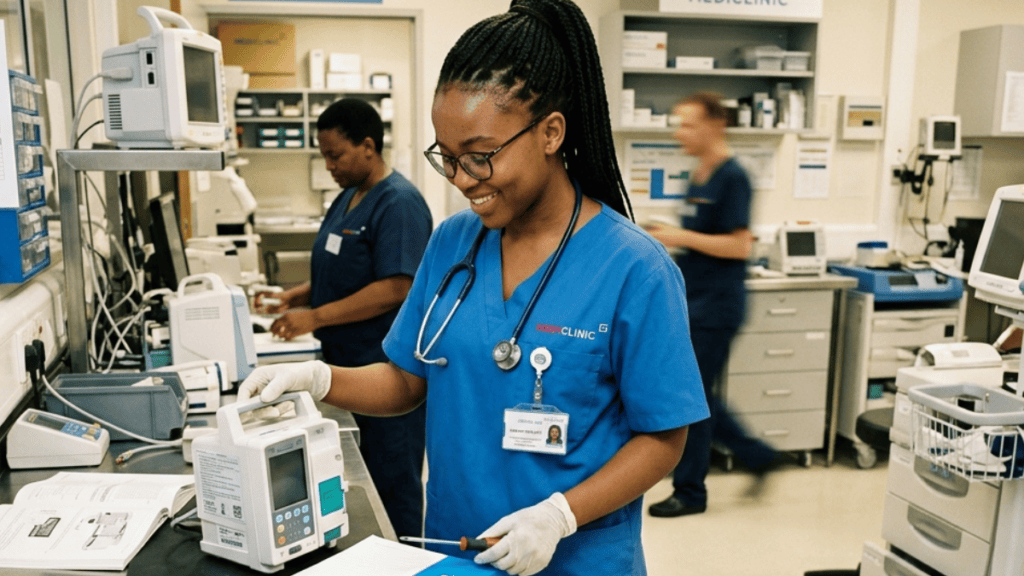
The Trainee Clinical Technician at Mediclinic programme offers an excellent opportunity for graduates who have completed the theoretical component of an NQF Level 6 Diploma in Electrical Engineering (Light Current) or Clinical Engineering. This fixed-term training opportunity is designed to provide valuable workplace experience in the maintenance and support of medical equipment within a hospital environment.
Other Opportunities
- Apply for NAP Administrative Clerk
- Apply at Department of Home Affairs for Cashier
- Apply for Laboratory Assistant at Department of afgi
With no previous work experience required, the programme is ideal for individuals looking to bridge the gap between academic learning and practical industry experience. Successful candidates will work under the supervision of experienced technical professionals while developing the knowledge and skills required to become competent Clinical Technicians.
Mediclinic is one of Southern Africa’s leading private healthcare providers, operating modern hospitals equipped with advanced medical technology. The organisation is committed to delivering high-quality healthcare while investing in the development of future healthcare professionals through structured training programmes.
If you are passionate about engineering, technology and healthcare, the Trainee Clinical Technician at Mediclinic opportunity provides practical exposure that can serve as a strong foundation for a long-term career.
Job Overview
Here is a summary of the available opportunity:
- Position: Trainee Clinical Technician
- Employer: Mediclinic
- Employment Type: Fixed-Term
- Workplace: On-site
- Number of Positions: 1
- Reference Number: 72025
- Recruiter: Magdalena Van Der Walt
- Closing Date: 03 August 2026
The Trainee Clinical Technician at Mediclinic programme focuses on work-integrated learning, allowing trainees to gain hands-on experience while supporting the hospital’s Technical Department.
About Mediclinic
Mediclinic is recognised as one of the leading private healthcare groups in Southern Africa. Its hospitals are equipped with sophisticated medical equipment used across various healthcare disciplines, including surgery, emergency medicine, intensive care, maternity services, oncology, radiology and laboratory services.
Behind every successful hospital is a skilled technical team responsible for ensuring that medical equipment operates safely, accurately and reliably. The Trainee Clinical Technician at Mediclinic programme allows aspiring technicians to become part of this essential support function.
Purpose of the Programme
The primary objective of the Trainee Clinical Technician at Mediclinic programme is to provide practical workplace learning that complements the theoretical knowledge gained during academic studies.
Rather than entering the workplace without practical exposure, trainees work directly with experienced Clinical Technicians who guide them through the maintenance, testing and support of medical devices used daily in patient care.
The programme allows participants to:
- Apply classroom knowledge in real hospital settings.
- Learn industry standards.
- Develop technical competence.
- Build confidence.
- Understand healthcare technology.
- Improve workplace readiness.
What Does a Clinical Technician Do?
Clinical Technicians play an important role in ensuring that hospitals operate safely and efficiently.
They are responsible for maintaining, inspecting and supporting a wide variety of medical equipment used by doctors, nurses and other healthcare professionals.
Examples include:
- Patient monitors
- Infusion pumps
- Defibrillators
- Ventilators
- ECG machines
- Ultrasound equipment
- Surgical devices
- Diagnostic instruments
During the Trainee Clinical Technician at Mediclinic programme, trainees gradually learn how this equipment functions while working under supervision.
Minimum Educational Requirements
Applicants interested in the Trainee Clinical Technician at Mediclinic opportunity must have completed all theoretical subjects required for:
- NQF Level 6 Diploma in Electrical Engineering (Light Current); or
- NQF Level 6 Diploma in Clinical Engineering.
The programme focuses on practical workplace training, making theoretical completion an essential requirement.
Experience Requirements
One of the biggest advantages of the Trainee Clinical Technician at Mediclinic opportunity is that no previous work experience is required.
Graduates who have never worked before are encouraged to apply.
The organisation understands that many graduates require workplace exposure before beginning their professional careers.
Preferred Qualifications
Although not compulsory, Mediclinic indicates that the following would be advantageous:
- Valid driver’s licence.
Possessing a driver’s licence may assist with future career opportunities involving travel between healthcare facilities.
Technical Knowledge Required
Applicants should possess:
- Computer literacy.
- Basic Microsoft Office skills.
- Understanding of engineering principles.
- Willingness to learn.
- Good communication skills.
- Professional attitude.
Although trainees continue learning throughout the programme, having strong computer skills helps with documentation and reporting.
Key Responsibilities
Successful candidates appointed as a Trainee Clinical Technician at Mediclinic will perform various duties under supervision.
These include:
Technical Support
Trainees assist experienced technicians in providing technical support throughout the hospital.
This may involve:
- Responding to equipment issues.
- Inspecting devices.
- Preparing equipment for servicing.
- Assisting healthcare professionals.
Learning directly from experienced technicians provides valuable practical knowledge.
Equipment Maintenance
Hospital equipment requires regular inspections and maintenance.
During the Trainee Clinical Technician at Mediclinic programme, participants learn:
- Preventative maintenance.
- Equipment testing.
- Performance verification.
- Safety inspections.
- Routine servicing.
These activities help ensure equipment remains safe for patient care.
Performing Technical Tasks
As trainees gain confidence, they gradually participate in technical jobs under supervision.
These tasks may include:
- Equipment installation.
- Functional testing.
- Component inspections.
- Equipment calibration assistance.
- Troubleshooting.
Each task contributes to building technical competence.
Risk Identification
Safety is extremely important in hospitals.
The Trainee Clinical Technician at Mediclinic programme teaches participants how to identify potential technical risks before they affect patient care.
This includes understanding:
- Electrical safety.
- Equipment reliability.
- Maintenance standards.
- Risk management procedures.
- Regulatory compliance.
Working with Contractors
Hospitals often use external contractors for specialised maintenance work.
Trainees learn how these projects are coordinated while ensuring hospital standards are maintained.
This introduces participants to project coordination, contractor supervision and workplace communication.
Office Administration
Technical departments rely on accurate administration.
Participants learn:
- Equipment record management.
- Maintenance documentation.
- Service reports.
- Filing systems.
- Asset registers.
- Work scheduling.
Administrative accuracy is an important part of technical operations.
Building Professional Relationships
The Trainee Clinical Technician at Mediclinic programme also focuses on communication and customer service.
Trainees work with:
- Doctors.
- Nurses.
- Specialists.
- Hospital administrators.
- Suppliers.
- Contractors.
- Patients indirectly through technical support.
Strong interpersonal skills contribute to effective teamwork across the hospital.
Learning Through Supervision
One of the strengths of the Trainee Clinical Technician at Mediclinic programme is structured supervision.
Rather than working independently immediately, trainees receive guidance from experienced Clinical Technicians who explain procedures, demonstrate best practices and provide ongoing feedback.
This approach allows graduates to develop confidence while maintaining patient safety and equipment reliability
Trainee Clinical Technician at Mediclinic
Skills You Will Develop
The Trainee Clinical Technician at Mediclinic programme is designed to help graduates transform theoretical engineering knowledge into practical workplace competence. Throughout the programme, trainees receive mentorship while learning how medical technology supports patient care.
Some of the valuable skills developed include:
- Preventative maintenance of medical equipment
- Equipment troubleshooting and fault diagnosis
- Electrical safety procedures
- Clinical engineering principles
- Technical reporting
- Inventory and asset management
- Communication with healthcare professionals
- Time management
- Problem-solving
- Professional workplace behaviour
These technical and professional skills prepare participants for future careers within hospitals, healthcare technology companies and biomedical engineering environments.
Working Environment
Unlike many engineering roles that focus on manufacturing or industrial production, Clinical Technicians work in healthcare facilities where equipment directly affects patient treatment and safety.
The working environment may include:
- Operating theatres
- Intensive Care Units (ICUs)
- Emergency departments
- Maternity wards
- Radiology departments
- Outpatient clinics
- Hospital laboratories
- Technical workshops
- Administrative offices
Every department relies on properly functioning equipment, making the Technical Department an essential support service within the hospital.
Importance of Medical Equipment Maintenance
Medical equipment must operate accurately at all times. Even small faults can affect patient diagnosis or treatment.
During the Trainee Clinical Technician at Mediclinic programme, trainees learn why regular maintenance is critical.
Benefits of proper equipment maintenance include:
- Improved patient safety
- Accurate medical results
- Reduced equipment downtime
- Lower repair costs
- Longer equipment lifespan
- Compliance with healthcare regulations
- Better operational efficiency
Understanding these principles helps trainees appreciate the significant responsibility carried by Clinical Technicians.
Risk Management in the Technical Department
Hospitals operate under strict health and safety regulations.
As part of the training programme, participants learn how to identify and reduce technical risks before they become major problems.
Examples include:
- Inspecting damaged electrical cables
- Identifying faulty equipment
- Reporting safety hazards
- Following maintenance schedules
- Recording equipment inspections
- Supporting compliance with hospital policies
Developing a proactive approach to risk management is an important aspect of becoming a competent Clinical Technician.
Stakeholder Communication
Although much of the work is technical, communication skills are equally important.
Clinical Technicians regularly interact with:
- Doctors
- Nurses
- Pharmacists
- Hospital management
- External suppliers
- Equipment manufacturers
- Service contractors
- Fellow technicians
The Trainee Clinical Technician at Mediclinic programme teaches participants how to communicate professionally while explaining technical issues in a way that non-technical staff can understand.
Computer Literacy in Clinical Engineering
Modern hospitals rely heavily on digital systems.
Trainees are expected to use computers for various daily tasks, including:
- Recording maintenance activities
- Updating equipment histories
- Completing service reports
- Tracking repair requests
- Managing inventories
- Scheduling maintenance
- Reviewing technical manuals
Mediclinic specifically requires applicants to possess Microsoft Office skills because accurate documentation forms part of everyday technical operations.
Why This Programme Is Ideal for Graduates
Many engineering graduates struggle to gain their first workplace opportunity because employers often request practical experience.
The Trainee Clinical Technician at Mediclinic programme addresses this challenge by providing structured work-integrated learning.
Benefits include:
- Practical workplace exposure
- Supervised learning
- Industry experience
- Professional mentorship
- Technical skills development
- Career networking opportunities
- Increased employability
- Exposure to advanced healthcare technology
For graduates who have completed their studies but have limited experience, this opportunity can significantly strengthen a CV.
Career Opportunities After Completion
Completing the programme can open doors to several career paths within the healthcare technology sector.
Possible future roles include:
- Clinical Technician
- Biomedical Equipment Technician
- Medical Equipment Specialist
- Technical Support Technician
- Biomedical Engineering Assistant
- Hospital Technical Officer
- Medical Device Service Technician
- Equipment Maintenance Specialist
Experience gained through structured workplace learning is often highly valued by employers across both the public and private healthcare sectors.
Tips for Preparing Your Application
To improve your chances of being shortlisted, consider the following recommendations:
Update Your CV
Ensure your Curriculum Vitae includes:
- Personal details
- Educational qualifications
- Academic achievements
- Computer skills
- Engineering projects
- Practical training
- Technical competencies
- Contactable references
Present your information clearly and professionally.
Highlight Relevant Qualifications
Clearly indicate that you have completed all theoretical subjects required for the relevant NQF Level 6 Diploma.
If available, include:
- Academic transcripts
- Completion letters
- Institution details
Demonstrate Computer Skills
Mediclinic specifically mentions Microsoft Office proficiency.
Mention experience using:
- Microsoft Word
- Excel
- PowerPoint
- Outlook
Even student projects involving these applications may strengthen your application.
Showcase Soft Skills
Technical knowledge alone is not enough.
Employers also value candidates who demonstrate:
- Reliability
- Professionalism
- Teamwork
- Communication
- Attention to detail
- Willingness to learn
- Initiative
- Adaptability
Providing examples from academic projects or practical training can strengthen your application.
Why Employers Value Clinical Technicians
Healthcare facilities invest significantly in medical technology.
Clinical Technicians help protect these investments by ensuring equipment remains reliable, compliant and safe.
Their work contributes to:
- Better patient care
- Improved hospital efficiency
- Reduced repair costs
- Compliance with healthcare standards
- Increased equipment availability
- Higher quality healthcare services
Because of these responsibilities, trained Clinical Technicians remain in demand across many healthcare institutions.
Professional Growth Opportunities
Continuous learning is an important part of this profession.
After completing the programme, many professionals continue expanding their expertise through:
- Advanced engineering studies
- Biomedical engineering courses
- Manufacturer equipment training
- Healthcare technology certifications
- Safety and compliance training
- Leadership development programmes
Continuous professional development helps technicians remain current with rapidly changing medical technologies.
How to Apply
Workplace Ethics and Confidentiality
Hospitals handle sensitive patient information every day.
Although Clinical Technicians primarily focus on equipment, they must still maintain confidentiality and professionalism at all times.
Trainees are expected to:
- Respect patient privacy
- Protect confidential information
- Follow hospital policies
- Work ethically
- Demonstrate honesty and integrity
- Treat colleagues respectfully
- Maintain professional conduct
These values contribute to a safe and trusted healthcare environment.
Dailyrise is on Social media platforms for more updates, follow our WhatsApp channel
Disclaimer: Dailyrise.co.za shares publicly available job vacancies.
We are not affiliated with any company or any employer.
For official updates, always visit the employer’s website directly


